


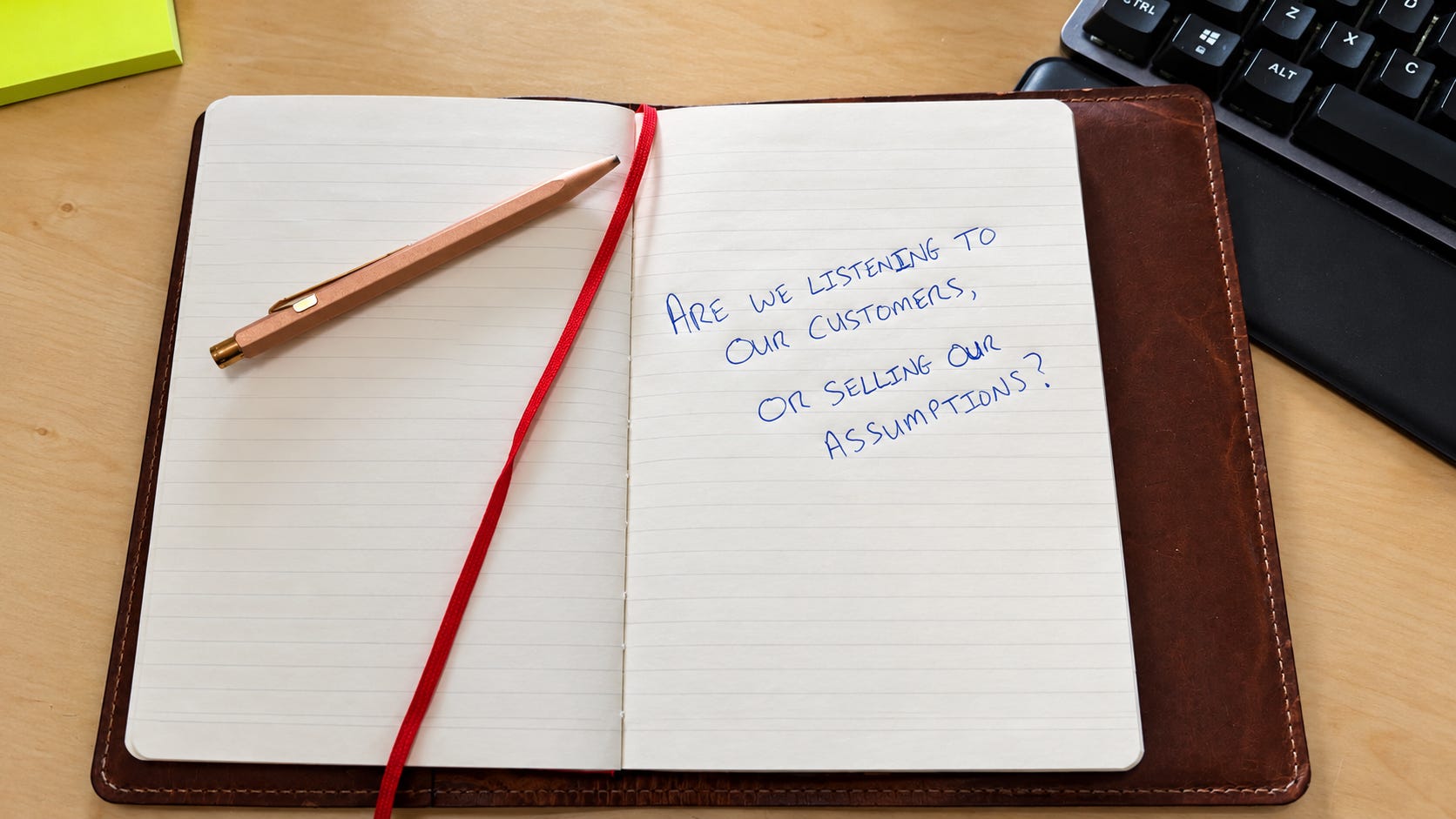
A conversation on LinkedIn this week stuck with me. The business owner said he had paused launching a few new projects and was 100% focused on developing the outcome they deliver rather than the new items. And it was working.
This isn’t the first time I have heard this. People with great ideas are often at risk of building their idea instead of a solution.
We build what we like, then go looking for someone to buy it.
Someone has an idea for a product or service that is clever and solves a problem we’re sure our clients have. Sometimes it’s just fun to build. We put time and money into it, train the team, and take it to market.
Then the market shrugs.
The first instinct is to blame the market or the team selling it. The customer just doesn’t get the value. Sales needs to explain it better. Possible, but more often we’re solving a problem the customer doesn’t have, at least not the way we imagined it. We solved a theoretical client challenge. Real clients have real challenges, and those are usually less exciting and more urgent than the ones we dreamed up.
Stay close to the customer
In sales, the best thing you can do for your company is stay close to the customer. Not just to close the next deal, but to learn what’s really going on:
What’s keeping them up at night
What they’re working around
Where their budget is breaking
What they keep asking for that nobody sells them
I had a customer once tell me about a challenge with their business over coffee. I listened and after hearing it from a few sides I asked them a question. A fundamental question about how this process was working for them. And I saw the light go on and they said “I’ve never thought about that problem that way”. The answer wasn’t introducing a new thing. The answer was connecting things they already had in a new way.
Listening and being close means more than collecting requests. It means understanding the problem behind the request. A customer asking for a lower price might have a price problem. Or they might be telling you that you’re hard to buy from. Or that while you solve some problems, they aren’t sure if you solve their problem.
The customer doesn’t always know the best solution. Ask the right questions though and they will know where the friction really is. I have a rule I come back to a lot: make complexity our problem, not the customer’s. You can only do that if you know where the complexity is. You find out by asking, then by being quiet long enough to hear the answer.
Every sales team is sitting on this information. The question is whether it makes it back into the business or stays in someone’s notebook.
Follow what they pay you for
As the feedback comes in, it will tell you something uncomfortable. What clients pay you for may not be what you thought your business or product was. Your biggest advantage might be something you never planned to build around.
That’s not failure. That’s the market doing you a favour.
Two questions worth asking every so often:
What are clients actually paying us for? Not what’s in the brochure. What would they miss if we disappeared?
What do they keep asking for that we don’t offer?
The answers are what you should optimize your business around.
This isn’t about having no vision
Listening to the market doesn’t mean chasing every request. A business that changes direction every time a customer sneezes isn’t adapting. It’s rudderless. The loudest customer isn’t the whole market, and a request you can’t deliver profitably isn’t an opportunity.
You still need a strong vision: who you serve, and why you exist. That part shouldn’t move much. What should move is how you deliver it. Hold firm on the problem you solve. Stay open on how you solve it.
The best leaders I’ve worked with did both. They had a clear point of view, and they were the first to change their mind when a customer showed them something better.
Start with the problem
Don’t start with a product or service and go looking for a problem. Start with the actual documented problem, then build something worth buying.
If you listen, your customers are telling you about the future of your business every day.
How much of what you sell today came from customer feedback, and how much from your original plan?